
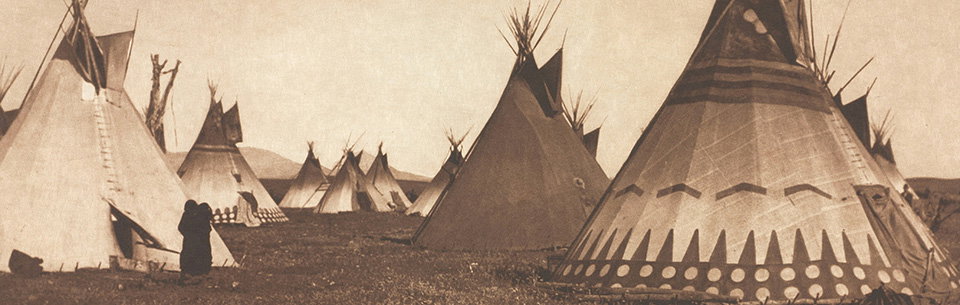
Photo by The Cleveland Museum of Art on Unsplash
An Unexpected Creationist Success
The surprising relationship between Native American history and Genesis
What does Native American history have to do with Genesis? Right now, public schools teach a 15,000-year history for North America that ultimately traces back to Africa 200,000 years ago. Before that, the schools trace human ancestry back several million years to our last common ancestor with the chimpanzees. In other words, mainstream education teaches a history of Native Americans that directly contradicts Genesis.
But this view has a fatal weakness. It has trouble connecting the 15,000-year archaeological narrative to real Native American tribes. Without links to tribes, it can’t recover a coherent pre-European play-by-play history.
But this article isn’t about evolutionary failures. It’s about the revolutionary success of something else—something intimately connected to Genesis. In the last few years, new research has uncovered the pre-European play-by-play history. But not just any research; research grounded in Genesis 1–11.
What do I mean? Let’s take a common education topic: the first Thanksgiving. I grew up learning the long backstory to the first Europeans who landed on Cape Cod in the AD 1600s. I never learned the backstory to their Algonquian—Native American—neighbors.
The reason? Evolution doesn’t have a good answer.
But now we do. And it’s thanks to the plain history in Genesis 1–11.
What do the opening chapters of Genesis 1–11 have to do with the history of the first Thanksgiving? Let me tell you a story, and the answer will become clear.
Several years ago, in 2018, I was working on the genetics of the history of human civilization. Why? Genesis 6–9 teaches that all pre-flood civilizations disappeared in the time of Noah. Therefore, all the civilizations we learn about in school must have arisen post-flood. For many technical reasons, we would expect this fact to leave a strong genetic signature.
One of the subcategories of the history of civilization revolves around the pre-European history of the Americas. In 2018, I was aware of a tragic fact: That 80% to 90% of the pre-European indigenous Americans had died out after European arrival. Surely this would show up in genetics, I thought.
I found the smoking gun! In fact, I found the smoking gun of the subsequent population recovery as well.
I found these smoking guns only when analyzing the data in the framework of 4,500 years back to Noah.
I should clarify: I found these smoking guns only when analyzing the data in the framework of 4,500 years back to Noah. The evolutionary timescale provided no such clarity.
I then took these findings—grounded in the Genesis timescale—one step further. I asked what the DNA might reveal about the history of civilization in the Americas before Europeans arrived.
To make a long story short, I made another fantastic discovery. It turns out that the answer I received from genetics matched the account of an Algonquian Native American tribe. The history of the Delaware—an Algonquian nation—described a migration from Asia around AD 900. DNA showed the same. The Delaware record then described a long migration down the western part of Canada into what is now the United States, then across the Great Plains, and eventually reaching the Atlantic shores.
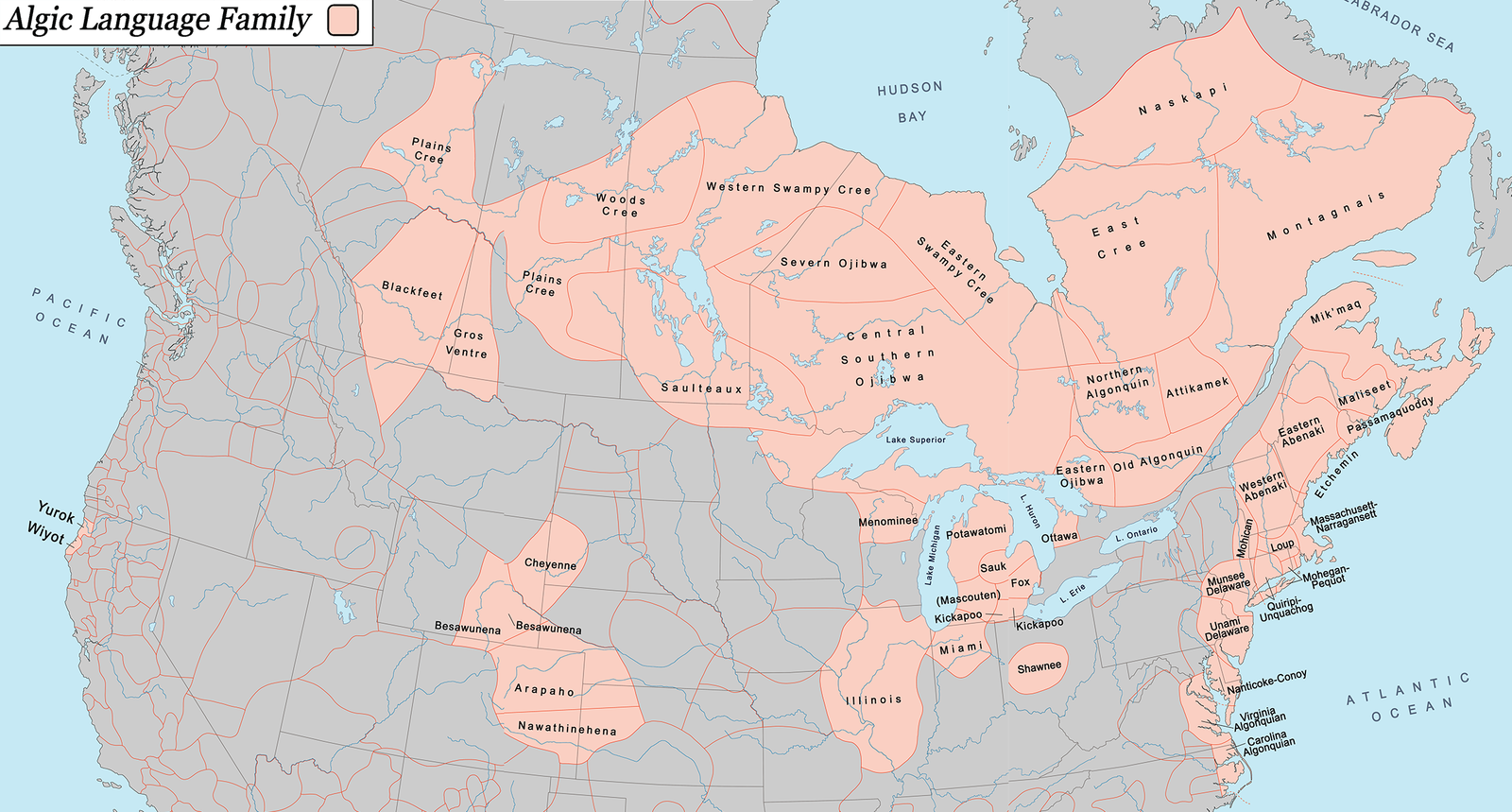
Native American nations in the Algic language family, of which the majority are Algonquian nations.
It turns out that the New England Algonquians—the ones greeting the Pilgrims—had arrived in Massachusetts only a century and a half before the Europeans did.
And now you know the rest of the story of the first Thanksgiving. The Genesis-based framework for science is filling in history that evolution has failed to supply.
For more history on the Algonquians, as well as the rest of North America, see They Had Names.
Support the creation/gospel message by donating or getting involved!

Answers in Genesis is an apologetics ministry, dedicated to helping Christians defend their faith and proclaim the good news of Jesus Christ.
- Customer Service 800.778.3390
- Available Monday–Friday | 9 AM–5 PM ET
- © 2026 Answers in Genesis